Case Study: How We Built a Low-Code Mobile App for Follow Ministries
Written by Lonocode Team

Background
When Follow Ministries approached us with a vision for a mobile-first platform to deliver personalized content to their community, we saw an opportunity to demonstrate the power of low-code development. In this case study, we walk through how Lonocode rapidly delivered a custom mobile MVP tailored to their needs, leveraging our proven process to go from concept to launch with speed, flexibility, and measurable impact.
The Challenge
Follow Ministries had a clear vision: create a mobile-first platform to deliver personalized, faith-based content to their community. But when they approached a traditional development firm, the proposed solution came with a seven-figure price tag, far beyond what a small ministry with no in-house technical staff could afford. With limited resources and no development team, they needed a partner who could deliver a high-quality, scalable solution without the overhead of conventional software development. That’s when they reached out to Lonocode.
A Low-Code Mobile Solution
Lonocode stepped in with a mobile-first, low-code approach that aligned perfectly with Follow Ministries’ needs. We began by deeply understanding their goals and constraints, then quickly moved into prototyping using our streamlined development process.
By leveraging the OutSystems low-code platform, we were able to accelerate delivery without sacrificing customization or performance. This allowed us to iterate quickly, incorporate feedback in real time, and stay aligned with the ministry’s vision throughout the build.
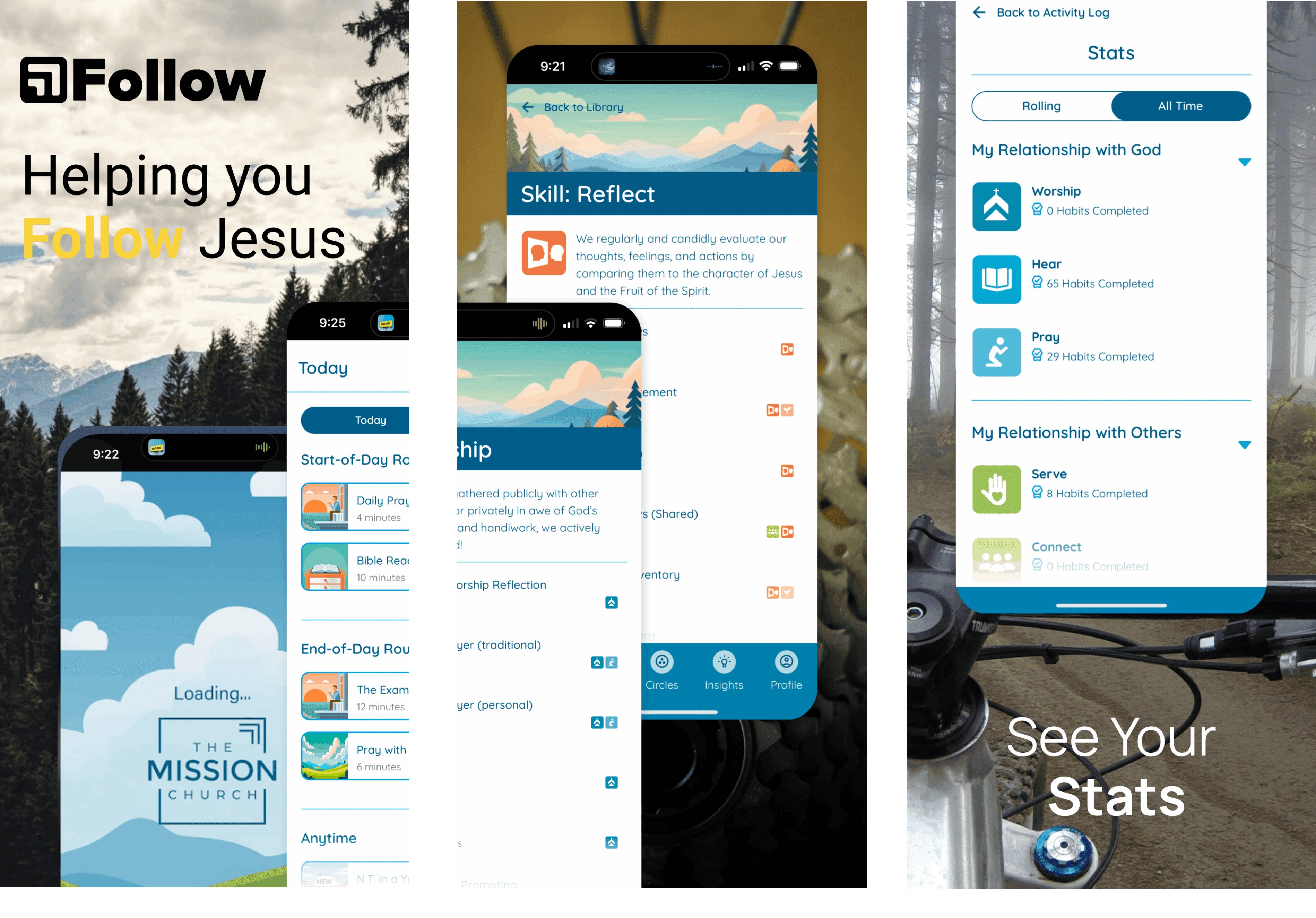
The result was a fully functional MVP that enabled Follow Ministries to deliver personalized content, track usage, and engage their community through a seamless mobile experience, all within a budget that made sense.
The Result
We chose to work with Lonocode as our app developer because their low-code approach allowed for much faster and more affordable development compared to the traditional approach. The main reasons we chose Lonocode were cost, speed, and the ability to iterate rapidly. On top of that, the Lonocode team has been fantastic to work with, reliable, communicative, and genuinely collaborative.
Michael Nave
Lead Pastor, The Mission Church of Southern Illinois
Solution Highlights
Low-Code Efficiency
Enabled rapid prototyping and real-time iteration based on feedback.
Delivered a fully functional MVP in a few months, not years, using a low-code platform.
Focused development time on building the solution, not writing boilerplate code.
1 developer and 1 UI/UX designer is all that was needed.
Full Stack Platform
Developed the mobile app, browser-based admin interface, and backend database using the same low-code foundation.
The backend app allows Follow Ministries to create, manage, and update habit-based content through an intuitive interface.
Enabled the ministry to maintain and evolve their content strategy without needing technical expertise or developer support.
Turnkey Delivery & Ongoing Support
Provided a complete solution, from design and development to deployment, without requiring a DevOps team or internal IT support.
The platform architecture minimizes technical debt and simplifies future updates and feature rollouts.
Lonocode continues to maintain and enhance the app, ensuring long-term stability and growth.
Keep Reading
Related Posts

We Have Been Ahead of the Agentic Coding Curve for Almost 4 Years
Everyone is scrambling to figure out agentic coding right now, but honestly, this is a world we already know. We have been living inside low-code platforms for almost four years, and a lot of what people are excited about today is stuff we have already been doing.

From Modernization to Mobility: Lonocode's Strategic Pivot to Mobile-First Low-Code Solutions
At Lonocode, our journey began with a clear mission: to help organizations modernize their legacy systems using low-code platforms. We focused on extending, refactoring, and...

Mobile-First Approach: How Gear Code Scaled Fast
Gear Code is a startup focused on technical operations and live event logistics. To enter the market, it needed a Minimum Viable Product (MVP) built with a mobile-first approach.
Have a project like this in mind?